What Is the Best Stone for Kitchen Countertops?
Article at a Glance
The best stone for kitchen countertops depends on how you cook, your maintenance tolerance, and your design goals
Quartz, porcelain, granite, marble, and quartzite each have distinct strengths and tradeoffs
Durability, stain resistance, and sealing requirements vary significantly between stone types
Choosing the wrong material can lead to costly repairs, staining, and long-term dissatisfaction
A professional stone fabricator can help you match the right material to your specific kitchen and lifestyle
Choosing the Best Kitchen Countertop Stone
Understanding Kitchen Countertop Needs
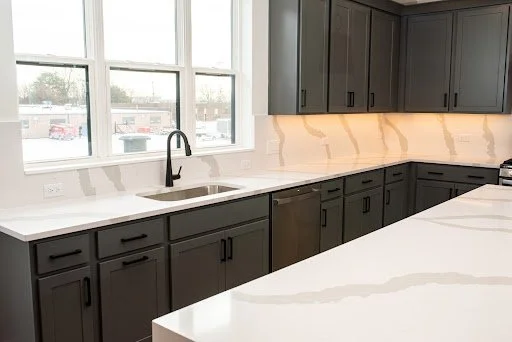
A kitchen countertop is one of the hardest-working surfaces in your home. It absorbs heat from pots, resists acidic spills, tolerates daily scrubbing, and anchors the visual design of your most-used room, all at the same time.
That's why material selection matters more than most homeowners initially realize. The stone that looks stunning in a showroom may not hold up to the way your household actually cooks, entertains, or lives. Before comparing materials, it helps to get clear on your kitchen's real demands.
Practical Requirements for Busy Homes
If your kitchen sees heavy daily use, frequent cooking, kids, entertaining, your countertop needs to perform under pressure. The key performance criteria to evaluate are:
Heat resistance: Can you place a hot pan directly on the surface without damage?
Scratch resistance: Will daily food prep with knives and utensils leave marks over time?
Stain resistance: How does the stone respond to wine, oil, coffee, and acidic foods like lemon or tomato?
Porosity: Does the stone absorb liquids, and if so, how frequently does it need sealing to stay hygienic and stain-free?
Maintenance load: Are you willing to seal annually, polish regularly, or use specific cleaning products, or do you need something closer to zero-maintenance?
Answering these honestly before you fall in love with a material will save significant frustration down the line.
Stone Options for Kitchen Countertops
The most common stone types used in kitchen countertops each bring a different profile of performance, aesthetics, and upkeep.
Quartz is an engineered stone made from crushed quartz bound with resin. It is non-porous, requires no sealing, and resists stains exceptionally well, making it one of the most practical choices for busy family kitchens. It comes in a wide range of consistent colors and patterns, though it is not as heat-resistant as natural stone and can be damaged by prolonged direct heat exposure.
Porcelain slabs are a newer entrant in the countertop space and are gaining ground quickly among designers and homeowners. They are
extremely hard, non-porous, UV-stable, and heat-resistant. Large-format porcelain slabs can run floor to ceiling, countertop to backsplash to feature wall, in one continuous material, creating a seamless, architectural look.
Granite is a classic natural stone known for its durability and unique patterning. It is heat and scratch-resistant but is porous and requires periodic sealing to prevent staining. No two granite slabs are identical, which appeals to homeowners who want a truly one-of-a-kind surface.
Marble is prized for its elegance and soft veining but is the most high-maintenance of the common stone options. It is porous, prone to etching from acids, and scratches more easily than granite or quartz. It suits lower-traffic kitchens or homeowners who accept its aging as part of its character.
Quartzite is a naturally occurring metamorphic stone that is often confused with quartz but is quite different. It is harder than marble and has a more natural look than engineered quartz. It requires sealing like granite but offers excellent durability for a natural stone.
Soapstone is a dense, non-porous natural stone with a distinctive matte appearance. It does not require sealing and is resistant to acids, making it genuinely low-maintenance. It is softer than granite and will develop a natural patina over time, something that appeals to some homeowners and not others.
Common Countertop Stone Problems
Most countertop issues that homeowners experience trace back to one of three causes: wrong material for the use case, poor fabrication, or lack of proper maintenance.
Staining is most common in porous stones — granite, marble, quartzite — that haven't been properly sealed or have had sealer wear off without reapplication. Oil, wine, and acidic liquids penetrate the surface and permanently discolor the stone if not treated quickly.
Etching is specific to calcium-based stones like marble and certain limestones. Acidic substances — lemon juice, vinegar, even some cleaning products — chemically react with the stone surface and leave dull marks that are distinct from stains and require professional polishing to address.
Cracking and chipping typically occur near cut-outs or along edges, often as a result of impact, improper support during installation, or an overly thin slab in a high-stress location.
Heat damage most commonly affects quartz (despite its many other advantages) — sustained heat from pots or pans placed directly on the surface can cause discoloration or cracking in the resin binder.
Long-Term Impact of the Wrong Stone
Choosing a material that doesn't match your kitchen's demands doesn't just create aesthetic frustration, it creates real financial cost. Replacing a countertop involves demolition, material costs, fabrication, and installation, easily running into several thousand dollars. Repair costs for etching, cracking, or deep staining on natural stone can also add up quickly.
Beyond cost, the wrong stone affects your daily experience. A high-maintenance material in a household that doesn't have time to maintain it will look worn within a few years. A stone that isn't heat-resistant in a kitchen where cooking is frequent creates constant anxiety around everyday tasks.
The right choice, made once and made well, will serve your household for decades.
Tips to Choose the Right Countertop Stone
Start with lifestyle before aesthetics. Be honest about how your kitchen is used — daily cooking, kids, entertaining, or occasional light use each suggest different material profiles.
Prioritize durability and maintenance fit over appearance alone. You can find beautiful options within every stone category. Let performance narrow the field first, then choose the look you love.
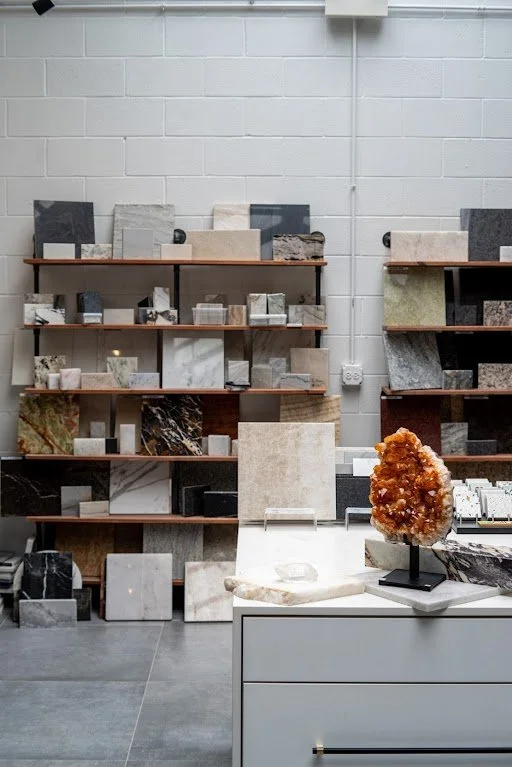
Request physical samples and live with them in your space. Lighting, cabinet color, and flooring all affect how a stone looks in your specific kitchen, what works in a showroom may not translate.
Ask your fabricator about slab quality, not just material type. Within any stone category, slab quality, origin, and thickness vary significantly. A knowledgeable fabricator can help you evaluate what you're actually buying.
Understand the full cost picture before committing. Material price per square foot is only part of the equation. Fabrication complexity, edge profiles, cut-outs, mitered sections, and installation scope affect the final number significantly.
When to Consult a Stone Specialist
Online research can get you most of the way to a shortlist, but a stone fabrication specialist brings something that no guide can replace: direct experience with how specific materials actually perform over time in real kitchens.
At Stone Experts, we've been fabricating and installing premium stone countertops across Chicago's North Shore for over 26 years, with more than 1,000 completed projects across luxury residences and multi-unit developments. We work with quartz, porcelain, and a full range of natural stone, and we help every client match the right material to their specific space, budget, and lifestyle.
We offer free consultations, in person or by phone, and our pricing is straightforward: what we quote is what you pay. If you're planning a kitchen renovation in Wilmette, Winnetka, Glencoe, Northbrook, or anywhere across the North Shore, we'd be glad to help you make the right call before you commit to anything.
Contact Stone Experts for a free kitchen countertop consultation.